
Part of the guide: Islamic Parenting: The Complete Guide for Muslim Moms
Muslim Mom Burnout: 9 Gentle Ways to Rest and Recover
You make breakfast, pack lunches, answer the school emails, clean the kitchen, pray in between, and put the kids to bed. Then you do the dishes again. At night, you lie in the dark thinking about everything you didn’t do: the Quran you didn’t read, the patience you lost, the du’a you rushed. You are exhausted, and underneath the tiredness is a quiet guilt: Shouldn’t I be able to handle this? Shouldn’t a good Muslim mother be more grateful, more patient, more everything?
If that sounds like you, you are not weak and you are not ungrateful. You may be experiencing burnout, and you deserve care as much as anyone. This article is part of our hub guide Islamic Parenting: The Complete Guide.
What Is Mom Burnout?
Burnout is deep, long-lasting exhaustion that comes from carrying too much for too long without enough rest or support. It’s not simply “being tired.” It can affect your body, your emotions and your faith.
Common signs: - Constant exhaustion, even after sleeping - Short temper, snapping at the children, then feeling awful - Feeling numb, detached or “going through the motions” - Dreading daily tasks you used to manage - Guilt that you’re “not doing enough” - Trouble concentrating, headaches or body aches - Feeling that your prayer and Quran time have become hurried or hollow - Crying easily, or feeling empty
If these signs are heavy or last for weeks, or if you have thoughts of harming yourself or feel hopeless, please speak to your doctor or a mental health professional right away, and reach out to someone you trust. If you are in immediate danger, contact your local emergency services. Burnout is common, and help works.
What Islam Says About Your Limits and Your Rest
Many Muslim mothers carry an invisible belief: “If I rest, I’m being selfish.” Islam teaches the opposite.
- “Allah does not burden a soul beyond its capacity” (Quran 2:286).
- “With hardship comes ease” (Quran 94:5–6).
- Salman (RA) once told Abu ad-Darda (RA), “Your Lord has a right over you, your soul has a right over you, and your family has a right over you, so give each its due.” The Prophet ﷺ confirmed, “Salman has spoken the truth” (Sahih al-Bukhari). Your body and soul have rights too.
- The Prophet ﷺ advised, “Take on only as much of deeds as you are able to do” (Sahih al-Bukhari and Sahih Muslim), and taught that the most beloved deeds to Allah are the consistent ones, even if small (Sahih al-Bukhari and Sahih Muslim).
- And the status of mothers is great. When a man asked who deserved his best companionship, the Prophet ﷺ answered “Your mother” three times before mentioning the father (Sahih al-Bukhari and Sahih Muslim).
Caring for yourself is not selfishness. It is part of keeping the trust (amanah) Allah gave you, because a depleted mother cannot give her best.
9 Gentle Ways to Recover
1. Lower the bar on purpose
Decide what is “good enough” for this season. Simple dinners, a rotation of easy meals, a tidy-enough house. Perfection is not required by Islam. Your children need a calm mother more than a spotless home.
2. Protect sleep like a prayer time
Sleep is a mercy: “He made your sleep a rest” (Quran 78:9). Go to bed earlier, share night duties with your husband or family if possible, and nap when babies nap. Fatigue makes everything harder.
3. Ask for help, specifically
“I need help” is vague. “Can you take the kids on Saturday from 10 to 12?” works. Ask your husband, parents, siblings, friends or neighbours. Offer to swap with another mom. Asking for help is following the Sunnah of cooperation: “Help one another in righteousness and piety” (Quran 5:2).
4. Take 10 minutes that are only yours
A walk, a quiet hot drink, a few pages of a book, a slow wudu, five minutes of sitting outdoors. Put it in your calendar like an appointment.
5. Make your worship lighter, not heavier
On the hardest days, keep your faith alive with small, steady acts: the five prayers (prayed at their times as best you can), a short dhikr, a few minutes of Quran, one sincere du’a. If you are nursing, ill or very tired, ask a scholar about concessions that apply to you. Allah accepts what you can do (Quran 64:16).
6. Release the guilt through repair
When you lose your temper, make wudu, say sorry to your child, ask Allah for forgiveness and continue. Guilt that leads to repair is healthy; guilt that leads to self-hatred is not. See How to Stop Yelling at Your Kids for gentle steps.
7. Build one small village
You cannot do this alone. Find or create a circle: a local halaqah, a WhatsApp group of moms, a playdate friend, an online community. Being understood lifts a heavy load.
8. Simplify and say no
Not every invitation, event or school job needs a yes. Choose what truly matters this season and say a kind no to the rest.
9. Get professional support when you need it
A doctor can check for physical causes of fatigue (like low iron, thyroid issues, postnatal depletion). A counselor, ideally one who understands your faith, can help with anxiety, low mood, trauma or anger. Taking the means is part of tawakkul: “tie your camel, then trust in Allah” (Sunan at-Tirmidhi).
A Simple Daily “Refill” Routine
| When | What | Time |
|---|---|---|
| Morning | A slow breath, Bismillah, one du’a for strength | 2 min |
| Midday | Water, a snack, five quiet minutes | 5 min |
| Afternoon | Step outside, look at the sky, say Subhan Allah | 5 min |
| Evening | Pray, then a hot drink and no screens | 10 min |
| Night | Three things I’m grateful for; ask Allah to forgive and help | 3 min |
Du’as for Heavy Days
- Hasbunallahu wa ni’mal-wakil: “Allah is sufficient for us, and He is the best disposer of affairs” (Quran 3:173).
- Rabbi inni lima anzalta ilayya min khayrin faqir: “My Lord, I am in need of whatever good You send down to me” (Quran 28:24).
- Rabbish-rahli sadri wa yassir li amri: “My Lord, expand my chest for me and make my task easy for me” (Quran 20:25–26).
What to Remember When You Feel You’re Failing
- Your children do not need a perfect mother. They need a loving, present, real one.
- A tired mom who keeps trying is still worshipping Allah through her care.
- Your mess, your noise and your late dinners are not proof of failure; they are the signs of a living, loving home.
- This season will change. Babies grow. Toddlers calm. Nights become longer. Allah is with you.
Your One Step This Week
Choose one: ask for one specific piece of help, or block ten minutes that are only yours. Do it without apology.
You are not alone. If you want more encouragement and practical routines for tired mothers, see my book Hearts Before Habits, which also includes self-care pages, and try the free printables. For the bigger picture, read Gentle Parenting in Islam.

Author of Hearts Before Habits. I share gentle, Sunnah-rooted help for Muslim moms — heart first, habit second. About me · More posts
Get the free Calm Mama Starter Kit
4 printable cards for calmer days: phrases, Sunnah calm-down steps, a bedtime routine and a weekly planner.
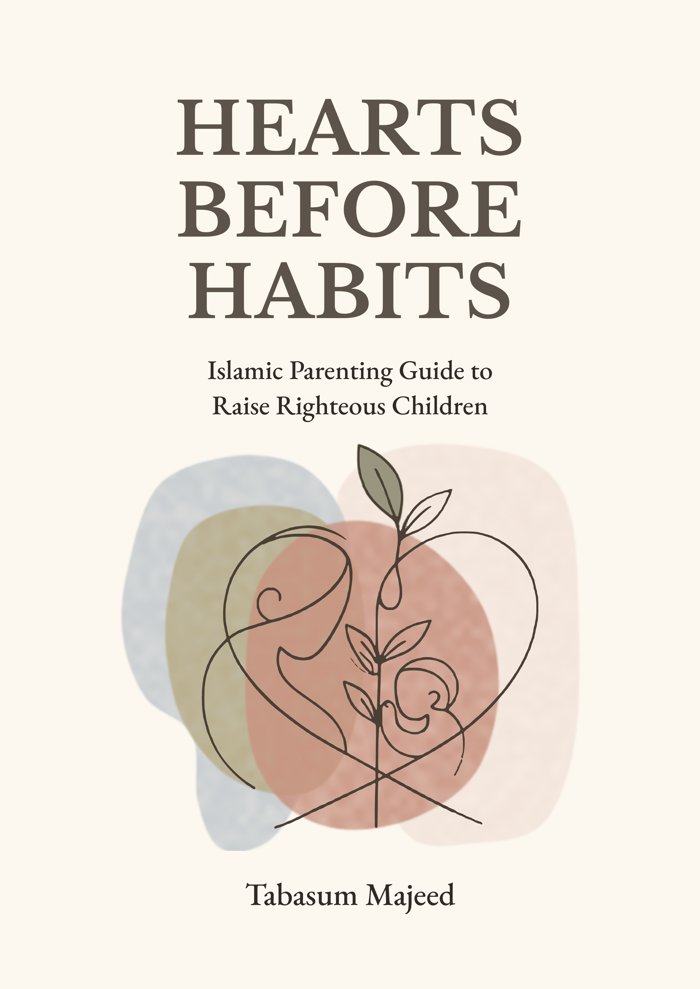
This article draws on Hearts Before Habits — a complete Islamic parenting guide with scripts, du'as, printables and a 30-day plan.
See the book Free printables Recommended booksKeep reading

Islamic Parenting: The Complete Guide for Muslim Moms
Islamic parenting explained simply — the Quran and Sunnah foundations, daily habits, discipline, faith and character, with real scripts for Muslim moms.
Read the article →
Daily Duas for Kids: 12 Easy Duas Every Muslim Child Can Learn
Daily duas for kids — 12 short, authentic supplications for eating, sleeping, leaving home and more, with meanings and simple ways to teach them.
Read the article →
How to Teach Kids About Allah: Love First, Always
How to teach kids about Allah with love, not fear — simple words by age, stories, Allah's names, answers to hard questions and everyday habits for Muslim moms.
Read the article →