Part of the guide: Islamic Parenting: The Complete Guide for Muslim Moms
10 Phrases Every Child Needs to Hear (Muslim Mom Edition)
You tuck your daughter in at night and, almost without thinking, say what you say every night: “Brush your teeth. Did you pray? Switch off the light.” It is all true and all necessary. But a quiet thought crosses your mind: When was the last time I told her what I really feel?
Words are one of the strongest tools a parent has. A child can forget what they were told to do and still remember, decades later, how a mother’s words made them feel. These 10 phrases every child needs to hear build a sense of safety, worth and faith. They are inspired by how the Prophet ﷺ spoke to children, and you can use them from toddlerhood to the teenage years. This article is part of our hub guide Islamic Parenting: The Complete Guide.
Why Words Matter So Much
The Prophet ﷺ said, “A good word is charity” (Sahih al-Bukhari and Sahih Muslim). Whenever you speak kindly to your child, you are giving sadaqah to the heart that matters most to you.
Children build their inner voice from what they hear at home. If they hear “You’re so difficult,” that becomes the voice in their head. If they hear “I’m so glad you’re mine,” that becomes their anchor. The good news: it is never too late to change the words you use.
The 10 Phrases
1. “I love you.”
The simplest and the most important. The Prophet ﷺ encouraged expressing love: “If a man loves his brother, let him tell him that he loves him” (Sunan Abi Dawud and Sunan at-Tirmidhi, graded hasan). And when his daughter Fatimah would enter, he would stand, kiss her and seat her in his place (Sunan Abi Dawud and Sunan at-Tirmidhi, graded sahih). Say it when they leave, when they return, when they are happy, when they are in trouble.
Try: “I love you, always. Even when I’m upset with what you did.”
2. “I’m so glad Allah gave you to me.”
This links love to gratitude. Children are a blessing, a “comfort to the eyes” (Quran 25:74). Telling them this makes them feel chosen, not like a burden.
Try: “Alhamdulillah for you. I make du’a thanking Allah for you every day.”
3. “I’m proud of you.”
Be specific. Praise effort, kindness, honesty and courage, not just results.
Try: “I’m proud of how you kept trying even when it was hard.”
4. “I’m sorry.”
Parents who apologise raise children who can. When you snap, repair it. This teaches humility and shows that relationships matter more than ego.
Try: “I spoke too loudly earlier. That wasn’t fair, and I’m sorry. Will you forgive me?”
5. “Everyone makes mistakes. Let’s fix it together.”
The Prophet ﷺ said, “Every son of Adam makes mistakes, and the best of those who make mistakes are those who repent” (Sunan at-Tirmidhi and Sunan Ibn Majah, graded hasan). Children who feel safe to make mistakes are more likely to tell the truth.
Try: “You spilled the juice. It’s okay. Let’s clean it up together.”
6. “I’m listening.”
Put the phone down and look at them. Feeling heard is among a child’s deepest needs. The Prophet ﷺ gave his full attention to people, including children. He would greet them, ask after them and listen.
Try: “Tell me more. I’m all ears.”
7. “You can tell me anything.”
The most protective sentence a parent can say. Children who feel they can talk to you about anything are safer, online and offline.
Try: “Whatever happens, you can come to me. I won’t stop loving you.”
8. “It’s okay to feel that way.”
Feelings are not sins. Allowing them helps children to name and manage them. Behaviour can be guided, but feelings welcome.
Try: “You feel sad and angry. That makes sense. I’m here.”
9. “Allah is always with you.”
This builds a child’s inner security. The Prophet ﷺ taught the young Ibn Abbas, “Be mindful of Allah, and He will protect you. Be mindful of Allah and you will find Him before you” (Sunan at-Tirmidhi, graded hasan sahih). Teach children that Allah is near, listens and cares. See How to Teach Kids About Allah.
Try: “Whenever you feel scared, you can say Bismillah and talk to Allah. He’s always with you.”
10. “I believe in you.”
Children grow into the beliefs we hold about them. Say it about their character and their ability to learn, repair and grow.
Try: “You’re learning to be patient, and I can see it. I believe in you.”
Phrases by Age
| Age | Phrases that help most |
|---|---|
| Toddlers | “I love you.” “You’re safe.” “I’m here.” |
| 4–7 | “I’m proud of you.” “Let’s fix it together.” “Allah loves you.” |
| 8–12 | “I’m listening.” “You can tell me anything.” “I believe in you.” |
| Teens | “I trust you.” “I’m here whenever you want to talk.” “I’m glad you’re mine.” |
Phrases to Retire
Some phrases wound without teaching. Try replacing:
| Instead of | Try |
|---|---|
| “You’re so naughty.” | “That choice wasn’t okay. Let’s try again.” |
| “Stop crying.” | “It’s okay to be sad. I’m with you.” |
| “Why can’t you be like your sister?” | “I love how you are. What’s hard right now?” |
| “You’ll never learn.” | “You’re still learning, and I’ll help.” |
| “I’m so disappointed in you.” | “I know you can do better, and I’ll help you.” |
If you hear yourself using the phrases in the left column, be gentle with yourself. Most of us learned them from our own parents. You can change the script.
Make It a Habit
- Create rituals: a kiss on the forehead at bedtime, a note in a lunchbox, a special handshake before school.
- Say it out loud, not only in your heart.
- Say it in different ways: words, notes, hugs, du’a.
- Repeat often. Children need to hear loved and valued many times.
- Include everyone. Siblings, cousins and teens all need these words.
- Make du’a with the words: “Ya Allah, make my child righteous, and make me a means of goodness to them.”
When It Feels Awkward
If you did not grow up hearing these words, saying them can feel strange. Start small, with a written note, a text or a whispered phrase at bedtime. It gets easier with practice, and your children will treasure it.
Your One Step This Week
Pick one phrase and say it every day to each child for seven days. Notice what changes.
If you’d like many more ready-to-use words and scripts, see my book Hearts Before Habits, and the free printables include a “kind words” card to keep on the fridge. You may also like Gentle Parenting in Islam and Muslim Mom Burnout.
Author of Hearts Before Habits. I share gentle, Sunnah-rooted help for Muslim moms — heart first, habit second. About me · More posts
Get the free Calm Mama Starter Kit
4 printable cards for calmer days: phrases, Sunnah calm-down steps, a bedtime routine and a weekly planner.
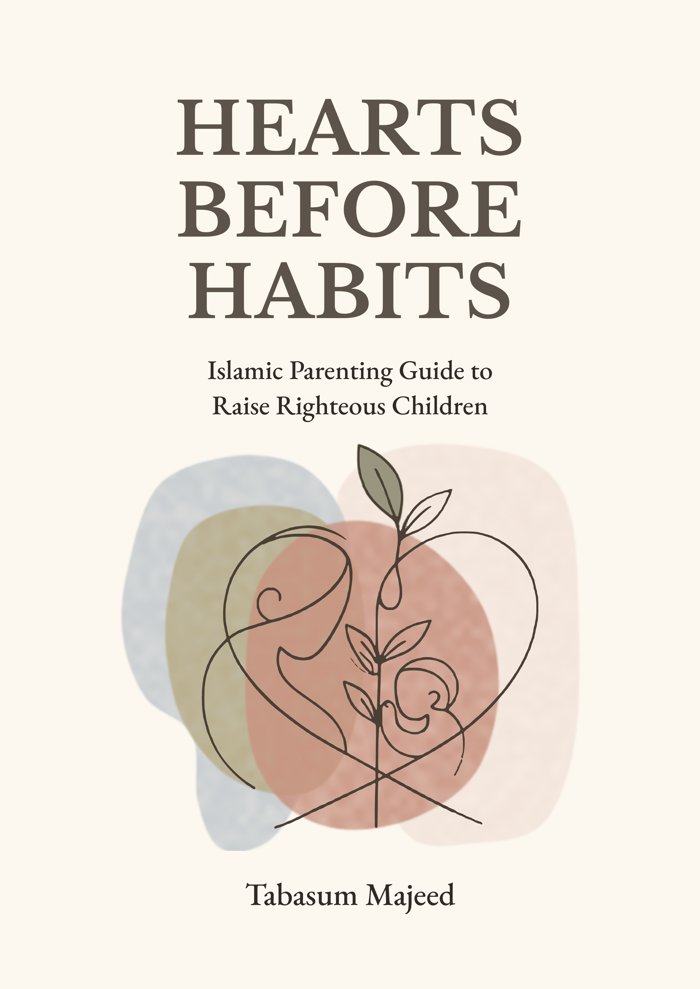
This article draws on Hearts Before Habits — a complete Islamic parenting guide with scripts, du'as, printables and a 30-day plan.
See the book Free printables Recommended booksKeep reading
Islamic Parenting: The Complete Guide for Muslim Moms
Islamic parenting explained simply — the Quran and Sunnah foundations, daily habits, discipline, faith and character, with real scripts for Muslim moms.
Read the article →
Daily Duas for Kids: 12 Easy Duas Every Muslim Child Can Learn
Daily duas for kids — 12 short, authentic supplications for eating, sleeping, leaving home and more, with meanings and simple ways to teach them.
Read the article →
Muslim Mom Burnout: 9 Gentle Ways to Rest and Recover
Muslim mom burnout is real. Learn the signs, what Islam says about rest and limits, and 9 gentle, practical ways to recover without guilt.
Read the article →