
How to Teach Kids Salah: A Complete Guide by Age

Your five-year-old has rolled out their little prayer mat, stood on it for exactly eleven seconds, and then asked if they can have a snack. Your ten-year-old “forgot” Asr again. Your teenager prays quickly, quietly, and without any visible joy. And you are wondering: Am I doing this right? How do I teach salah so it lasts?
Take a breath. Teaching salah is one of the longest, most rewarding projects of parenthood — and it is not meant to be done in a week. This guide shows you how to teach kids salah step by step, from toddlers to teens, using the Sunnah’s own approach: start early, keep it loving, build slowly, and stay patient. You will find what to do at each age, what to say, what to avoid, and a simple home routine.
Start With the Big Idea: Love Before Rules
The Quran tells us, “Enjoin prayer upon your family and be steadfast in it” (Quran 20:132). Notice the two parts: you enjoin — and you are steadfast yourself. Children learn salah mostly by watching us do it.
Luqman, the wise father in the Quran, tells his son, “O my dear son, establish prayer” (Quran 31:17) — and he says it tenderly, surrounded by advice about humility and kindness. Prayer is introduced as a relationship with Allah, not as a chore.
The Prophet ﷺ is also reported to have said in a narration found in Sunan Abi Dawud: “Command your children to pray when they are seven, and discipline them for it when they are ten, and separate their beds.” This narration is often quoted as the guide for children’s prayer. Please remember two things when reading it. First, it describes training over years: seven is the beginning of a long road, not a deadline. Second, scholars differ on how to understand the “discipline” at ten, and contemporary scholars emphasise that it never allows harm, anger or humiliation; if you have questions, ask a qualified scholar. What matters most is the direction: begin early, build gradually, and keep the child’s heart attached.
The coolness of my eyes was placed in prayer. — Musnad Ahmad and Sunan an-Nasa’i
We want our children to feel that coolness — not dread. So the plan below is built on joy first, habit second.
Stage 1: Babies and Toddlers (0–3) — Let Them Be Near
At this age, your child does not need to pray. They need to see prayer and feel it is safe and lovely.
What to do: - Pray where they can see you. Let them crawl, sit on your lap or climb on your back. The Prophet ﷺ carried his granddaughter Umamah while praying (Sahih al-Bukhari and Sahih Muslim), and he allowed his grandson to climb on his back during sujood (Musnad Ahmad, Sunan an-Nasa’i). A child on the mat is not a failure of khushu’; it is Sunnah. - Say “Allahu Akbar” out loud in a happy voice when you start. - Give them a small mat of their own. - Let them hear the adhan and say “Alhamdulillah” often.
What to say: “It’s time to pray. Do you want to stand next to me?”
Avoid: Forcing them to sit still or scolding them for wandering. At this age, being near is the lesson.
Stage 2: Ages 4–6 — Make It Playful
Now the child can copy movements, listen to short words and enjoy routines. This is the golden window for joy.
What to do: - Turn salah into a “special time.” A little mat, a pretty scarf, a particular spot in the house. - Teach the movements one at a time: standing, bowing (ruku’), prostration (sujood), sitting. Use a short rhyme or song. - Teach Subhan Allah, Alhamdulillah, Allahu Akbar and one or two short surahs (Al-Fatihah, Al-Ikhlas) by repetition and gentle praise. - Put a salah chart on the fridge and let them add a sticker each time they join you for any prayer. Our free Salah tracker and good-deeds checklist is made for this. - Tell stories of the Prophet ﷺ and his companions as children — love for the Messenger ﷺ becomes love for what he loved.
What to say: “You’re growing so big! Which prayer would you like to join today?”
Avoid: Comparing them to a sibling or friend, or using fear (“Allah will be angry”). Love for Allah comes first.
Stage 3: Ages 7–9 — Build the Habit, Gently
This is the age the narration refers to as the beginning of formal training. Your child can now understand reasons, remember more and take responsibility.
What to do: - Teach wudu properly, then the full salah — standing, recitation, ruku’, sujood, tashahhud — step by step, over weeks. - Teach the meaning of Al-Fatihah in simple words so they know what they are saying. - Set a family prayer time, at least for one or two prayers a day. When the family prays together, the child doesn’t feel singled out. - Invite, don’t nag: “It’s Maghrib, habibti. Shall we pray?” Say it once, warmly, then go to your mat. Your example will do more than your reminders. - Praise effort specifically: “I noticed you got up for Asr without me asking. That made me so happy.” - Teach what to do when they forget: “If you miss a prayer, pray it when you remember, and make a fresh start.” It is far better for a child to know that mistakes are fixable than to be afraid of them.
What to say: “Allah loves it when we try, even if it’s hard. I’m proud of you.”
Avoid: Public embarrassment, threats, or turning prayer into a reward-or-punishment system. Rewards can help as a bridge, but the goal is for the child to pray because they love Allah.
Stage 4: Ages 10–12 — Responsibility and Understanding
Children at this age are ready for more independence — and often start pushing back. Stay close.
What to do: - Ask what is hard: “Which prayer feels hardest for you?” Listen without correcting. Most of the time it is Fajr or the one that falls during school or play. - Make a plan together: an alarm they choose, a prayer spot they like, a buddy system. - Teach more: the meaning of the surahs they recite, the du’as after prayer, the wisdom behind the times. - Respect that this is becoming their worship. Gradually move from “I’ll remind you” to “Would you like me to check in or would you rather handle it?” - Talk about the real reason we pray: gratitude, connection, calm and guidance. Share your own struggle honestly — “Some days I find it hard too, and I ask Allah for help.”
Fajr can be especially tough in these years. We have a full guide: How to Get Kids Up for Fajr Without a Fight.
What to say: “I won’t nag you, but I’m always here if you want company.”
Avoid: Public reminders in front of friends, sarcasm, comparing and “when I was your age…” lectures.
Stage 5: Teens (13+) — Own It
Teenagers need dignity and trust more than reminders. Your job shifts from manager to mentor.
What to do: - Pray visibly yourself and keep your home peaceful enough for prayer to feel natural. - Offer a calm door to doubt: “You can ask me anything, even if it feels uncomfortable.” - Link salah to their life: stress before exams, friendships, big decisions. Teach them to ask Allah for help in sujood. - Make du’a for them, and let them hear you. - If they stop praying, avoid explosions. Keep the relationship warm, keep the door open, keep your own salah steady, and keep making du’a. Consider involving a trusted mentor or imam they like. Hearts turn slowly, and Allah is the One who guides.
What to say: “I love you no matter what. I’d love to see you close to Allah — I’m here if you want to talk.”
Avoid: Ultimatums, withdrawing love, or taking away the things that connect you.
A Simple Family Salah Routine
Here is a routine that works for many families, and it takes under ten minutes of “extra” effort:
- Fajr: Parent prays; young kids sleep or sit in; older kids wake with their own alarm. (More tips in the Fajr guide.)
- Dhuhr / Asr: For school-age kids, a quick prayer after returning home. Keep a prayer mat in a visible, comfortable corner.
- Maghrib: The family prayer. Everyone at home prays together, then shares one thing they are grateful for.
- Isha: Pray before bedtime stories. End with “Bismillah” and the Ayat al-Kursi, which the Prophet ﷺ taught as protection at night (Sahih al-Bukhari).
Add the du’as of daily life once these become easy — see Daily Duas for Kids.
Common Mistakes to Avoid
- Starting with too much. Five prayers on day one is overwhelming. Build one at a time.
- Making salah a punishment. “Go and pray!” in an angry voice teaches the child to associate prayer with anger.
- Skipping the meaning. Children who understand the words pray with more heart.
- Expecting perfection. Kids fidget, giggle and forget. That’s okay. Keep the vibe warm.
- Not praying yourself. Our children are always watching. Our own consistency teaches more than any speech.
- Forgetting du’a. Ask Allah to make your children “establishers of prayer” (Quran 14:40).
When It Feels Like It’s Not Working
Some children struggle with focus, anxiety, learning difficulties or sensory challenges, and prayer can feel harder for them. If your child’s difficulty seems to go beyond ordinary resistance, speak with their teacher, doctor or a qualified specialist, and adjust expectations with compassion. Allah does not burden a soul beyond its capacity (Quran 2:286), and a child’s worship should always be matched to what they can manage.
And on days when you feel you are failing: you are not. You are planting. The seed may take years to grow, but you keep watering with love and du’a.
Your One Step This Week
Choose one prayer and one habit. For example: “Every day this week, my child and I will pray Maghrib side by side.” That’s it. When that feels easy, add another.
The book Hearts Before Habits includes a full chapter on teaching salah with warmth, plus ready-made routines and du’as. And if your family loves Quran time, you may enjoy How to Teach Quran to Kids at Home and the hub guide Islamic Parenting: The Complete Guide.

Author of Hearts Before Habits. I share gentle, Sunnah-rooted help for Muslim moms — heart first, habit second. About me · More posts
More in this guide
- How to Get Kids Up for Fajr Without a Fight
How to get kids up for Fajr gently — sleep tips, a calm wake-up routine, the Sunnah's example and scripts by age, so mornings stop being a battle. - How to Teach Quran to Kids at Home: A Gentle Guide
How to teach Quran to kids at home — a simple daily routine, ideas by age, memorisation tips and what the Sunnah says, for busy Muslim moms.
Get the free Calm Mama Starter Kit
4 printable cards for calmer days: phrases, Sunnah calm-down steps, a bedtime routine and a weekly planner.
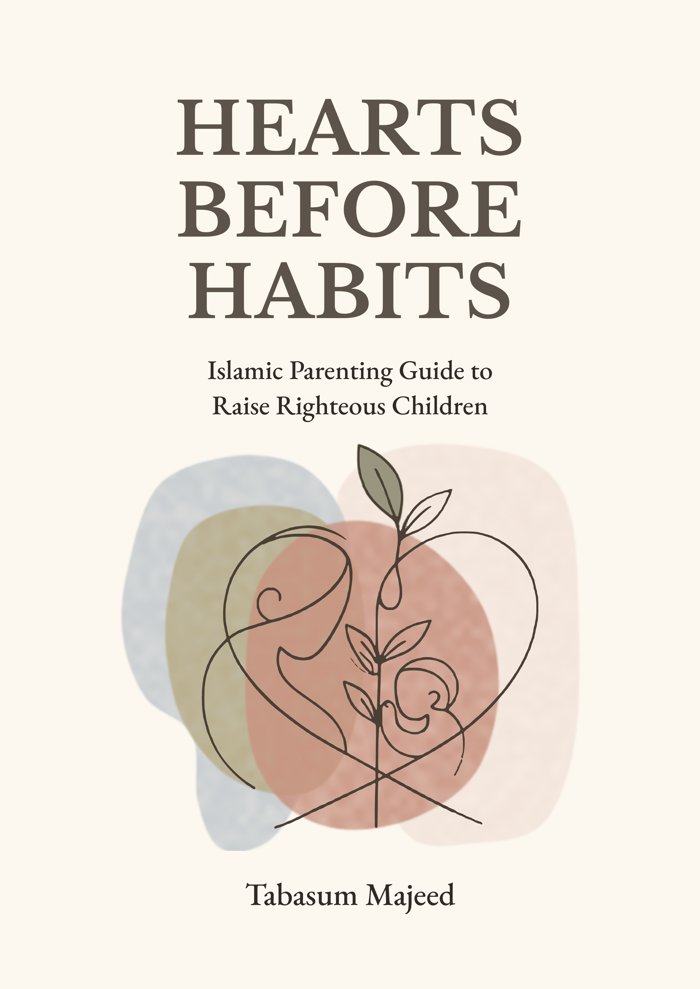
This article draws on Hearts Before Habits — a complete Islamic parenting guide with scripts, du'as, printables and a 30-day plan.
See the book Free printables Recommended booksKeep reading

How to Get Kids Up for Fajr Without a Fight
How to get kids up for Fajr gently — sleep tips, a calm wake-up routine, the Sunnah's example and scripts by age, so mornings stop being a battle.
Read the article →
How to Teach Quran to Kids at Home: A Gentle Guide
How to teach Quran to kids at home — a simple daily routine, ideas by age, memorisation tips and what the Sunnah says, for busy Muslim moms.
Read the article →
Daily Duas for Kids: 12 Easy Duas Every Muslim Child Can Learn
Daily duas for kids — 12 short, authentic supplications for eating, sleeping, leaving home and more, with meanings and simple ways to teach them.
Read the article →