
Ramadan with Kids: The Complete Guide for Muslim Moms

It is the last week of Shaban. The shopping list is long, the house is a bit of a mess, and you are quietly worried. Last year Ramadan flew by in a blur of cooking, tired tempers and “I’ll do better next time.” This year you want something different: a Ramadan your children will remember with a smile, not just a month of cranky afternoons and a kitchen full of dishes.
The good news is that Ramadan with kids doesn’t need to be perfect or Pinterest-fancy. It needs a little planning, a lot of warmth, and a few simple traditions that repeat every day. This guide gives you exactly that: how to prepare, what to do at each age, how to handle fasting gently, ideas for the last ten nights, and a realistic daily rhythm for a busy mom.
A note on timing: Ramadan 2027 is expected to begin around early-to-mid February 2027, depending on the moon sighting in your area. That means the best time to start preparing is now, in the weeks before.
Why Ramadan Is Such a Powerful Time for Children
The Prophet ﷺ said, “When Ramadan comes, the gates of Paradise are opened, the gates of Hell are closed, and the devils are chained” (Sahih al-Bukhari and Sahih Muslim). Children feel the atmosphere of Ramadan long before they understand its rules: the lanterns, the shared meals, the late-night prayers, the sense that the whole community is doing something special together.
That atmosphere is a gift. Memories made in Ramadan tend to last a lifetime. The goal of Ramadan with children is not to squeeze adult worship into small bodies. It is to make them fall in love with the month, so that one day, as adults, they long for it.
Step 1: Prepare Hearts Before You Prepare the Kitchen
Start two to four weeks before Ramadan.
Talk about it with excitement. “Guess what’s coming soon? Ramadan! It’s the month when we try extra hard to be kind and close to Allah.” Ask each child what they are looking forward to.
Set one family intention. Choose a single goal the whole family shares, such as “to be kinder to each other” or “to finish the Quran together as a family, a little each day.” Write it on a card and put it on the fridge.
Let children help. Kids love “owning” a piece of the month. Let them decorate the house, plan a Ramadan menu, or design the Ramadan calendar. Even toddlers can stick stars on a chart.
Get the printables ready. Our free Salah tracker and good-deeds checklist works beautifully through Ramadan.
Lighten your own load. Cook and freeze meals if you can, simplify the menu, and agree on shared household jobs. A calmer mom makes for a calmer Ramadan.
Step 2: Create a Gentle Ramadan Daily Rhythm
Children thrive on routine, and Ramadan changes everything: sleep, meals, energy. Here is a rhythm that many families find workable. Adjust it to your own timetable.
| Time | What happens | Child-friendly touch |
|---|---|---|
| Before Fajr | Suhoor | Let older kids help make it; little ones can sleep. The Prophet ﷺ said, “Eat suhoor, for in suhoor there is blessing” (Sahih al-Bukhari and Sahih Muslim). |
| After Fajr | A short Quran or du’a moment | Read one page or one short surah together, then rest. |
| Daytime | Normal routine, quieter pace | Keep school and chores, but expect lower energy; schedule outings and play for the morning. |
| Afternoon | Quiet time | Stories, drawing, Quran listening, a short nap. Cook with children if they enjoy it. |
| Before Maghrib | Pre-iftar du’a time | Gather around the table, hold hands and make du’a. The fasting person’s du’a is not rejected, so teach children to ask for what they love. |
| Iftar | Break the fast together | Start with dates and water, as the Sunnah teaches. Share one “thing I’m grateful for.” |
| Evening | Taraweeh or family Quran | Take turns reading. Allow children to pray as much as they can and to rest when they need to. |
Step 3: Ramadan by Age
Toddlers (1–3): Let Them Feel It
Toddlers don’t fast and don’t need to understand the details. What they remember is the mood.
- Decorate with them: moon-and-star paper chains, a little lantern, a “Ramadan Mubarak” banner.
- Let them hold a date and say “Bismillah” before eating it at iftar.
- Bring them near you when you pray, even briefly.
- Keep the same bedtime as much as possible; a rested toddler makes a calmer mom.
Little Kids (4–7): Make It a Treasure Hunt
Children this age love countdowns, stickers and “special jobs.”
- A 30-day “kindness calendar”: each day has one small act: “Share a toy,” “Call grandma,” “Say something nice to your brother.”
- A “good deeds jar”: every time they do something kind, they add a bead or a paper star. At the end of the month, count them together and thank Allah.
- Stories of the Prophets or the Prophet’s ﷺ kindness to children at bedtime.
- Practice fasting for a few hours if they are keen (see our guide: How to Teach Kids to Fast in Ramadan).
- Give them a role at iftar: counting dates, pouring water, setting the table.
Older Kids (8–12): Give Real Responsibility
Children this age can start to own their Ramadan.
- Help them set a personal goal: a surah to memorise, a daily page of Quran, a weekly charity act.
- Let them plan and cook one iftar a week.
- Introduce Laylat al-Qadr and the last ten nights with stories of why they matter.
- Work toward gradual fasting, one day or half-days, with their consent.
- Involve them in giving: choosing a charity, packing food boxes or donating from their savings.
Teens (13+): Respect and Trust
Teenagers often feel Ramadan deeply, and they hate being nagged.
- Ask for their input about the family plan instead of announcing one.
- Offer them roles that matter: leading a family du’a, reading a short passage of Quran at iftar, helping younger siblings.
- Be their companion in worship, not their supervisor. Pray beside them. Invite, don’t police.
- Make space for their questions about faith, especially in the quiet nights.
Step 4: Simple Ramadan Traditions That Stick
Traditions don’t need to be elaborate. The best ones are small and repeated:
- The daily “Ramadan jar”: a jar of folded notes with a tiny task for each day (“Make du’a for someone you love,” “Give a sadaqah coin”).
- The “dates and du’a” moment: five quiet minutes before iftar, with everyone holding a date and making their own du’a. The Prophet ﷺ taught us that the fasting person has a du’a that is not rejected at the time of breaking the fast (Sunan Ibn Majah; some scholars grade it hasan).
- Feeding others: the Prophet ﷺ said, “Whoever gives food for a fasting person to break his fast will have a reward like his, without anything being reduced from the reward of the fasting person” (Sunan at-Tirmidhi, graded sahih). Let your children help you prepare a plate for a neighbour, or invite someone to iftar.
- A family Quran circle: even ten minutes a day. If a child is learning, let them read their part; if they are too small, let them hold the Mushaf and listen.
- A sadaqah box: every night, each child adds a coin. At the end of the month, they decide together where to give.
- A gratitude moment at iftar: one thing each person is thankful for.
Step 5: The Last Ten Nights and Laylat al-Qadr
The Prophet ﷺ taught us to seek Laylat al-Qadr in the last ten nights (Sahih al-Bukhari). For families, these nights can be among the most beautiful of the year.
- Set a calm tone: dim lights, favourite snacks, cushions on the floor.
- Teach the du’a the Prophet ﷺ taught Aisha (RA) for this night: “Allahumma innaka ‘afuwwun tuhibbul-‘afwa fa’fu ‘anni,” meaning “O Allah, You are Pardoning and love pardon, so pardon me” (Sunan at-Tirmidhi, sahih).
- Let older children stay up for part of the night if they wish, and allow little ones to sleep without guilt.
- Make it a “night of du’a”: each family member makes du’a aloud for someone else.
- Plan a simple Eid preparation time with children: choosing outfits, wrapping small gifts, baking cookies for neighbours.
Handling the Hard Parts
Cranky afternoons. Hunger and tiredness make everyone short-tempered, including you. Keep afternoons quiet, avoid unnecessary outings and have a simple “calm corner.” When you feel your own patience fading, step away, make wudu and breathe. Our guide How to Stop Yelling at Your Kids has the Sunnah’s tools for exactly this.
Cooking overload. You do not need five dishes at every iftar. The best meals are often the simplest. Ask for help, and let your family eat leftovers.
Missed fasts and weak days. Some children, and some mothers (due to pregnancy, nursing, illness or monthly cycles), may not fast. Allah has made allowances, and nobody should be shamed. Ask a qualified scholar about your specific situation.
Comparison. Social media can make it look as though everyone else has perfect Ramadan crafts and well-behaved children. Please remember the highlight reel isn’t the whole story.
Screen time. Ramadan afternoons can easily turn into endless screens. Plan a few offline activities in advance — a puzzle, a craft, an audio story.
What to Do With the Kids After Ramadan
Ramadan is a training camp, not the finish line. In Shawwal, keep one or two habits going: the family Quran circle, the gratitude moment, the sadaqah jar. The Prophet ﷺ taught that the most beloved deeds to Allah are those done consistently, even if small (Sahih al-Bukhari and Sahih Muslim). A tiny habit that survives is worth more than a huge plan that doesn’t.
When Ramadan Feels Overwhelming
If you are tired, anxious or grieving this Ramadan, please be gentle with yourself. Allah is Merciful, and He knows your circumstances. If low mood or anxiety is affecting your daily life, talk to your doctor or a qualified counselor. Needing help is not a lack of iman.
Your One Step This Week
Choose one Ramadan tradition to begin before the month starts, perhaps the 30-day kindness calendar or the iftar du’a moment. Put it on the fridge and begin.
If you’d like more routines, du’as and weekly plans, my book Hearts Before Habits includes a Ramadan plan for families. To get your kids up for Fajr more gently, read How to Get Kids Up for Fajr Without a Fight, and for everyday supplications see Daily Duas for Kids. You can also return to the main hub, Islamic Parenting: The Complete Guide.
May Allah make this a Ramadan that warms your home and your children’s hearts. Ramadan Mubarak in advance. 🌙

Author of Hearts Before Habits. I share gentle, Sunnah-rooted help for Muslim moms — heart first, habit second. About me · More posts
More in this guide
- How to Teach Kids to Fast in Ramadan (Gently, by Age)
How to teach kids to fast in Ramadan gradually — signs of readiness, practice fasts by age, suhoor and iftar tips, safety and what the Sunnah says.
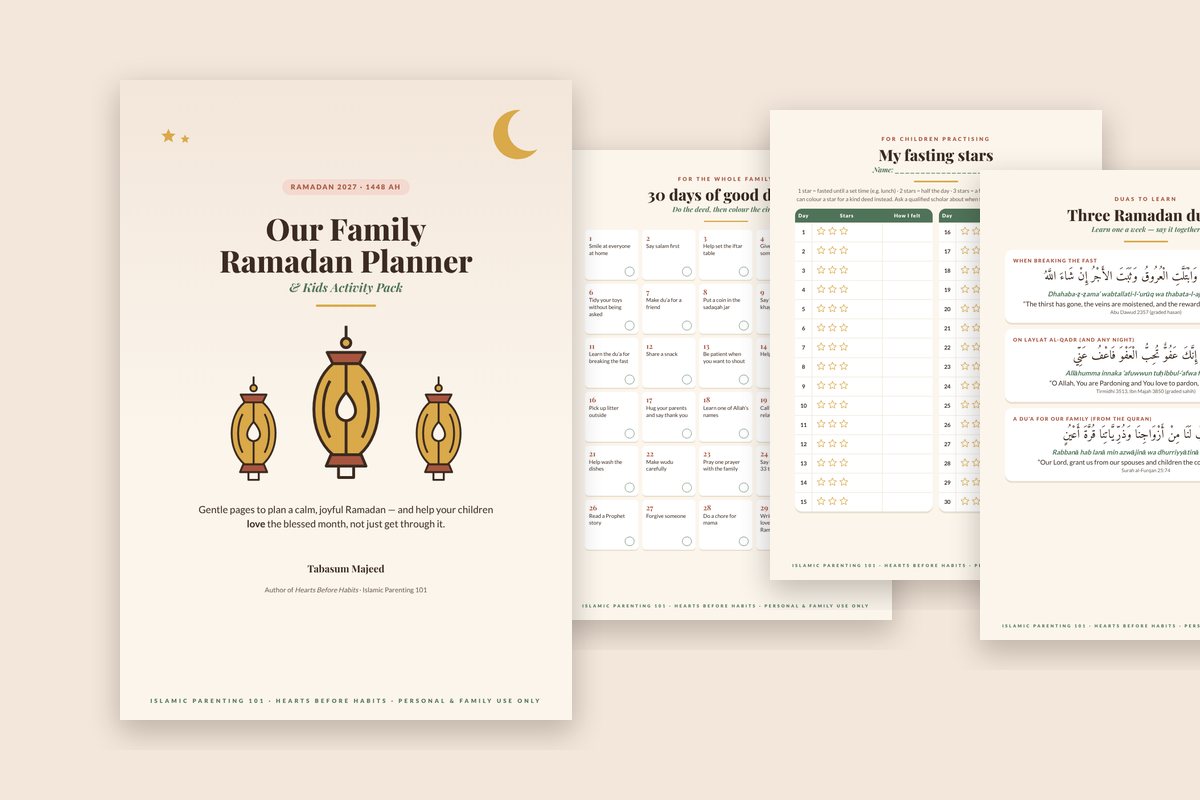
19 printable pages: good-deeds calendar, fasting and salah trackers for kids, Quran tracker, du'as, word search and more.
See the Ramadan PlannerGet the free Calm Mama Starter Kit
4 printable cards for calmer days: phrases, Sunnah calm-down steps, a bedtime routine and a weekly planner.
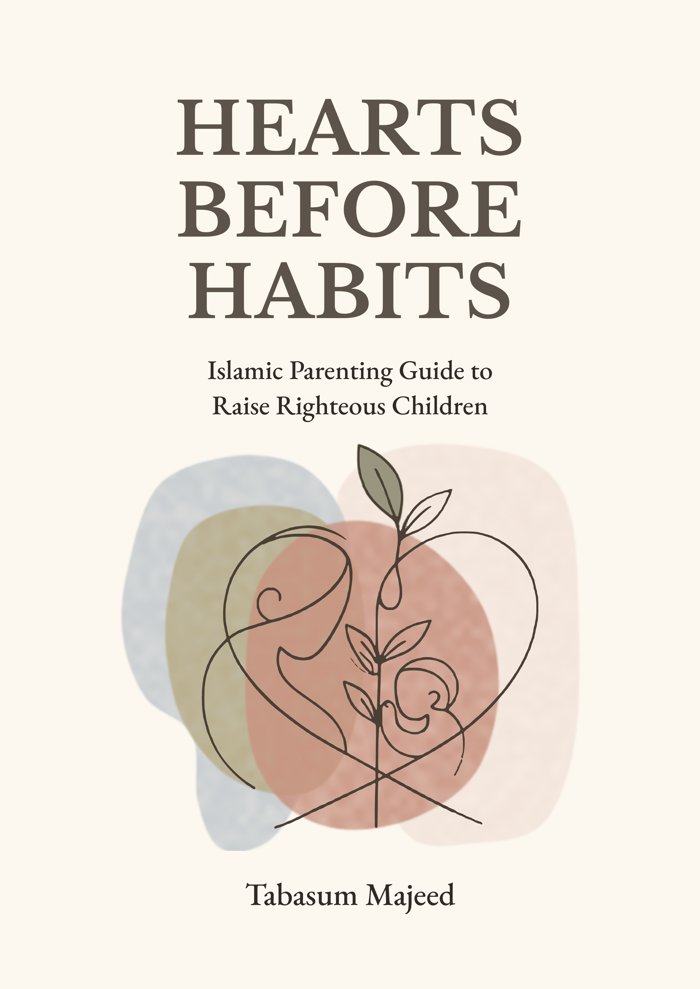
This article draws on Hearts Before Habits — a complete Islamic parenting guide with scripts, du'as, printables and a 30-day plan.
See the book Free printables Recommended booksKeep reading

How to Teach Kids to Fast in Ramadan (Gently, by Age)
How to teach kids to fast in Ramadan gradually — signs of readiness, practice fasts by age, suhoor and iftar tips, safety and what the Sunnah says.
Read the article →
Daily Duas for Kids: 12 Easy Duas Every Muslim Child Can Learn
Daily duas for kids — 12 short, authentic supplications for eating, sleeping, leaving home and more, with meanings and simple ways to teach them.
Read the article →
Gentle Parenting in Islam: The Complete Guide for Muslim Moms
Gentle parenting in Islam explained — what the Quran and Sunnah teach about mercy, boundaries and discipline, with real scripts for everyday moments.
Read the article →