
Part of the guide: Ramadan with Kids: The Complete Guide for Muslim Moms
How to Teach Kids to Fast in Ramadan (Gently, by Age)

Your seven-year-old announces, with enormous pride, that she wants to fast “the whole day, like you.” You smile, then worry. Is she too young? Should you let her try? What if she gets tired, dizzy, or upset and feels she failed?
Teaching children to fast is one of the most memorable parts of Ramadan, and it deserves a plan. This guide shows you how to teach kids to fast gradually and safely, by age, and in a way that builds love for the month instead of dread. It is part of our hub guide Ramadan with Kids: The Complete Guide.
Important: fasting is obligatory on a child only when they reach puberty (bulugh). Before then, any fasting is voluntary practice. Every child is different, so if your child has a medical condition, always speak to your doctor, and for rulings ask a qualified scholar.
What the Sunnah Shows
The companions trained their children gently. Ar-Rubayyi’ bint Mu’awwidh (RA) reported that after the Prophet ﷺ announced the fast of Ashura, they fasted it and made their children fast too. “We would make toys out of wool for them, and when one of them cried for food, we would give him the toy until it was time to break the fast” (Sahih al-Bukhari and Sahih Muslim).
Look at what this shows us: training, play and distraction, with patience. The goal was never to push a child to the point of suffering. And Allah says, “Allah intends ease for you and does not intend hardship” (Quran 2:185).
Signs Your Child May Be Ready to Practise
There is no single “right” age. Some children begin practice fasts at 6 or 7; others at 9 or 10. Look for:
- Interest. They want to try.
- Health. They are generally well, growing and eating normally.
- Stamina. They can go a few hours between meals.
- Understanding. They can grasp why we fast.
- Emotional readiness. They can handle feeling hungry without major distress.
Never force a child to fast, and never shame a child who can’t. The aim is love, not endurance.
A Gradual Plan by Age
Ages 4–6: The Spirit of the Month
- Don’t practise full fasting. Focus on the feeling: dates, suhoor snacks, iftar du’a, helping set the table.
- Try a “fasting hour”: skip one snack and break it with dates and du’a.
- Say “Bismillah” and “Alhamdulillah” excitedly.
Ages 7–9: Practice Fasts
- Start with half-day fasts (until Dhuhr or Asr), on weekends or school holidays.
- Make it special: a special suhoor plate, a “fasting buddy” sticker, a treat at iftar.
- Gradually increase from half to three-quarters of a day, as they show readiness.
- Offer a way out without shame: “You can stop whenever you need. Allah knows you tried.”
- Try a few weekend practice fasts before Ramadan so the real month isn’t the first attempt.
Ages 10–12: Building Up
- Encourage a few full fasts during Ramadan, perhaps on weekends or the odd weekday.
- Let them plan the day: what to eat, how to spend the afternoon.
- Talk about intention (niyyah), patience and the reward of fasting.
- Continue to respect their limits and health.
Teens (13+)
- Most will be required to fast (once they have reached puberty). Support them like adults: nutrition, sleep, du’a, understanding.
- Pair exams or sports with extra rest.
- Respect their privacy if they struggle, and speak to a scholar or doctor if needed.
Suhoor and Iftar: Fuel the Fast
The Prophet ﷺ said, “Eat suhoor, for in suhoor there is blessing” (Sahih al-Bukhari and Sahih Muslim). Good suhoor helps children cope with the day.
Suhoor ideas: - Oats, eggs, yoghurt, fruit, nuts, whole-grain bread, smoothies. - Slow-release foods help: oats, beans, whole grains. - Plenty of water, though not so much that it upsets the stomach.
Iftar basics: The Sunnah is to break the fast with fresh dates, or water if no dates are available (Sunan Abi Dawud and Sunan at-Tirmidhi). Follow with a balanced meal rather than only sweets.
Avoid: Lots of sugary, salty or fried foods, which increase thirst and tiredness.
Making the Day Easier
- Keep mornings active, afternoons calm. Do outdoor play or school work earlier; keep afternoons quiet.
- Distract gently, just as the companions did: crafts, drawing, Quran stories, puzzles, audio books.
- Nap if needed.
- Stay out of the heat and avoid heavy exertion on practice days.
- Talk about the meaning: “We fast to remember those who are hungry and to be thankful.”
- Praise effort: “I’m so proud of how you tried today.”
Safety First
Stop the fast immediately and give fluids and food if your child:
- Feels dizzy, faint or very weak
- Has a headache that doesn’t ease
- Vomits or shows signs of dehydration (dark urine, dry mouth, extreme tiredness)
- Has a medical condition (such as diabetes) that makes fasting risky
Please ask your child’s doctor before they fast if they have any health condition, take regular medication or are underweight. A child’s health is an amanah (trust), and Allah has made fasting a worship that only those who are able do.
What to Say When They Break Their Fast
If your child cries because they couldn’t finish: “I’m proud of you for trying. Allah loves your effort. Next time we’ll try again.” If they ask whether it “counts,” reassure them: “Allah knows your heart, and every try is rewarded.” (If your child is under the age of obligation, it’s a practice, not a debt.)
Common Mistakes
- Pushing too hard or too early. Training should be gradual.
- Comparing with siblings or cousins. Every child is different.
- Making fasting a performance for relatives. It’s between the child and Allah.
- Forgetting nutrition and sleep. These matter as much as willpower.
- Making failure shameful. Shame backfires.
- Ignoring warning signs. If your child looks unwell, stop.
For Moms Who Are Also Fasting
You’re doing double duty: fasting yourself while caring for kids. Plan simple meals, ask for help, rest when you can, and remember that your patience is worship. See How to Stop Yelling at Your Kids if afternoon tempers get short. If you’re pregnant, nursing, ill or recovering, ask your doctor and a qualified scholar about your own situation.
Your One Step This Week
Choose one thing: plan a “practice day” for the coming weekend, or make a suhoor plate with your child. Keep it light and fun.
For a printable Ramadan tracker and a full month plan, see my book Hearts Before Habits and the free printables. You can also read How to Get Kids Up for Fajr Without a Fight for Ramadan mornings.

Author of Hearts Before Habits. I share gentle, Sunnah-rooted help for Muslim moms — heart first, habit second. About me · More posts
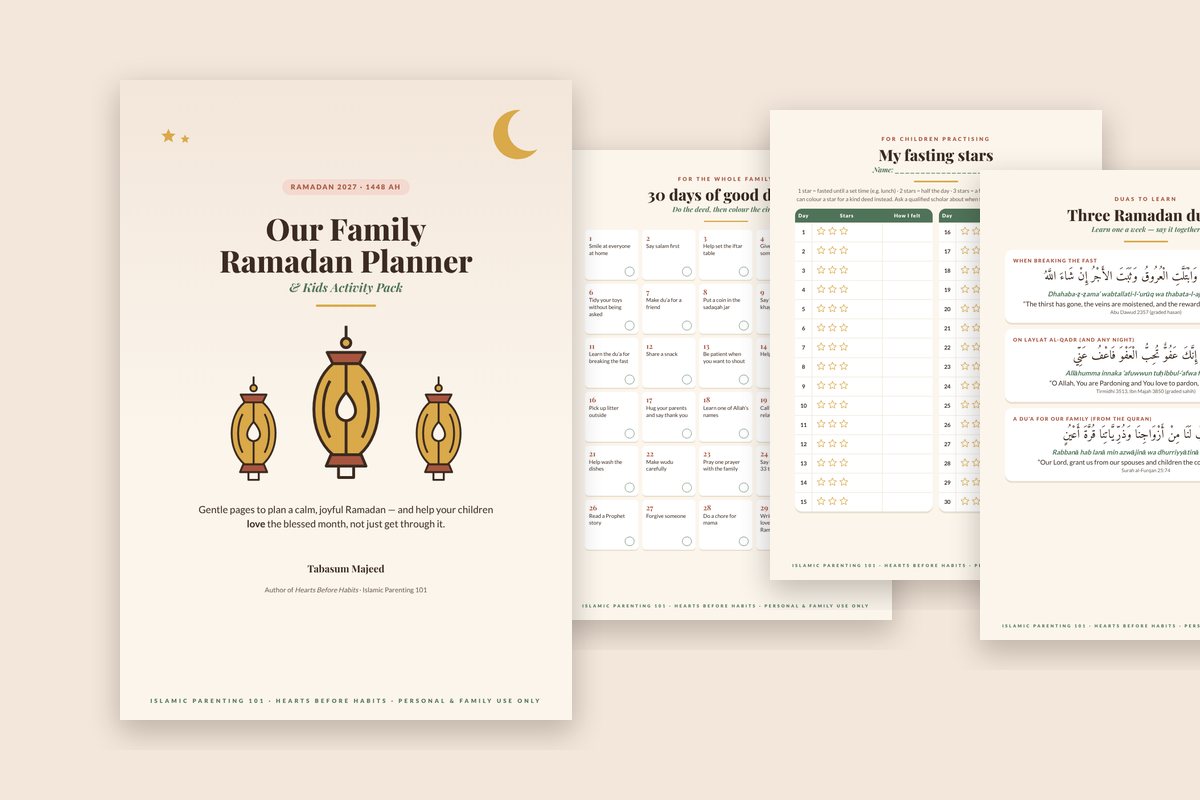
19 printable pages: good-deeds calendar, fasting and salah trackers for kids, Quran tracker, du'as, word search and more.
See the Ramadan PlannerGet the free Calm Mama Starter Kit
4 printable cards for calmer days: phrases, Sunnah calm-down steps, a bedtime routine and a weekly planner.
This article draws on Hearts Before Habits — a complete Islamic parenting guide with scripts, du'as, printables and a 30-day plan.
See the book Free printables Recommended booksKeep reading

Ramadan with Kids: The Complete Guide for Muslim Moms
Ramadan with kids made joyful — how to prepare, what to do by age, simple traditions, fasting tips and a month-long plan for a calm, meaningful Ramadan.
Read the article →
Daily Duas for Kids: 12 Easy Duas Every Muslim Child Can Learn
Daily duas for kids — 12 short, authentic supplications for eating, sleeping, leaving home and more, with meanings and simple ways to teach them.
Read the article →
Gentle Parenting in Islam: The Complete Guide for Muslim Moms
Gentle parenting in Islam explained — what the Quran and Sunnah teach about mercy, boundaries and discipline, with real scripts for everyday moments.
Read the article →